Top Solar Security Cameras for 2025: Your Ultimate Guide to Wireless, Solar-Powered Outdoor Surveillance
Your Ultimate Guide to Wireless, Solar-Powered Outdoor Surveillance

Solar security cameras blend surveillance tech with solar panels and battery systems for wire-free, self-sufficient outdoor monitoring that cuts reliance on grid power. This guide dives into how solar cameras operate, the key features for unwavering 24/7 surveillance, and how to pair camera models and power setups with real-world needs like remote farms, construction sites, and home perimeters. You'll discover how solar panels, MPPT controllers, and battery capacity work with camera power draw and connectivity (Wi-Fi vs. 4G) to ensure continuous operation. We'll also cover how AI features, night vision, and storage choices impact detection accuracy and overall cost. This article lays out essential features, brand comparisons, practical installation and maintenance tips, and buying advice to help you pick solar camera systems perfectly suited to your site conditions and budget. Throughout, you'll find model comparison tables, actionable checklists, and vendor insights to help you evaluate options and, if you choose, source Hikvision or Dahua solutions through a specialist reseller.
What Exactly Are Solar Security Cameras and How Do They Function?
What Exactly Are Solar Security Cameras and How Do They Function?
Solar security cameras are surveillance devices powered by sunlight via an external or built-in solar panel that charges an internal battery through a charge controller. This setup allows for wireless outdoor monitoring without needing a constant mains power connection. The system harnesses the solar panel to generate DC power, uses an MPPT or PWM controller to optimize charging, and relies on a rechargeable battery to store energy for nighttime and cloudy periods. The camera then draws power from this battery and transmits video over Wi-Fi or 4G. This design offers immense flexibility in placement, especially where running AC power is difficult, while also lowering operating expenses and reducing your carbon footprint compared to grid-powered systems. Understanding the electrical flow from the panel to the controller, then to the battery, and finally to the camera is crucial for correctly sizing panels and batteries based on your site's sunlight conditions and the camera's usage patterns, which will inform our panel wattage and battery capacity recommendations later on.
How Does Solar Power Make Wireless Security Cameras Possible?
How Does Solar Power Make Wireless Security Cameras Possible?
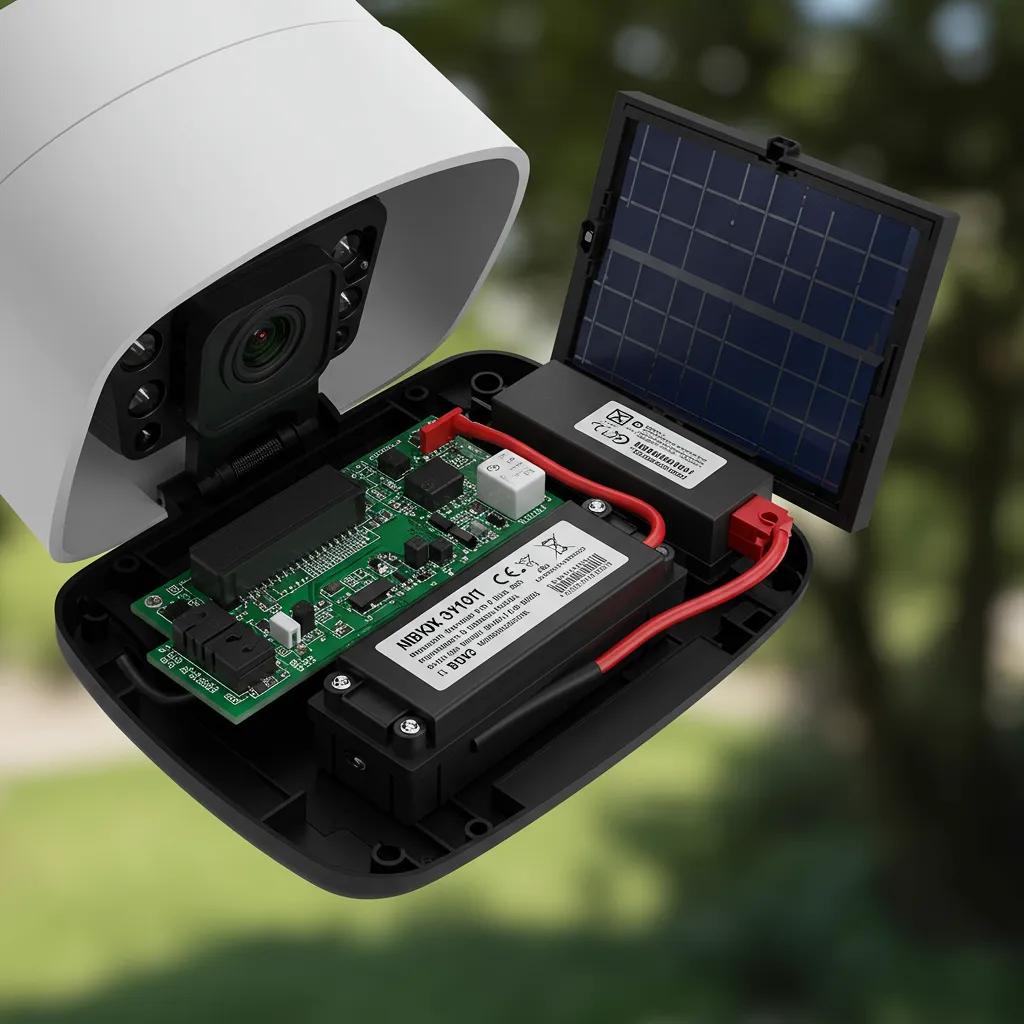
Solar power enables wireless security cameras by providing a renewable DC energy source that's regulated and stored, allowing the camera to operate independently of the electrical grid. This capability is key for off-grid deployments and flexible camera placement. An MPPT charge controller boosts effective panel output compared to PWM, especially under fluctuating sunlight, leading to more efficient charging and quicker recharge times. Opting for lithium-based batteries offers a lighter weight and longer cycle life than traditional lead-acid options. System designers calculate a daily energy budget by multiplying the camera's average wattage by its expected active hours, then add a buffer for seasonal variations to determine the necessary battery capacity and panel wattage. A methodical sizing approach prevents underpowered systems that can lead to connectivity drops and informs critical decisions about panel tilt, mounting height, and whether to incorporate a secondary battery or hybrid backup.
What Connectivity Options Do Solar Cameras Typically Employ?
What Connectivity Options Do Solar Cameras Typically Employ?
Solar cameras commonly utilize Wi-Fi, 4G LTE, or a combination of both to transmit video footage and alerts. Each option comes with its own set of trade-offs regarding placement, reliability, and data expenses. Wi-Fi provides high bandwidth and low latency for local networks but relies on existing infrastructure and has a limited range. 4G LTE offers independent connectivity for remote locations but requires data plans and is subject to cellular coverage variability. Hybrid solutions can combine local recording to a microSD card or NVR with cellular backup for alerts, ensuring footage is saved even during network outages and reducing ongoing cloud subscription costs. Your specific connectivity needs will dictate choices for modem-equipped models (4G), antenna placement, and the necessity for local storage, all of which directly impact power budgeting and battery sizing.
How Do Solar Cameras Achieve Continuous 24/7 Surveillance?
How Do Solar Cameras Achieve Continuous 24/7 Surveillance?
Achieving continuous 24/7 surveillance with solar cameras hinges on having adequate energy storage, intelligent power management, and optimized workloads, such as scheduled recording and AI-driven event capture. Battery reserve sizing aims to provide autonomy for several nights under low-sun conditions, while firmware features like low-power sleep modes, event-triggered recording, and adjustable frame rates help minimize average power consumption. Night vision modes (IR versus color/starlight) have different power demands—IR is efficient when active, whereas color illumination draws more current—so configuration choices directly affect operational uptime. Properly designed systems strike a balance between battery capacity, panel wattage, and smart camera settings to meet real-world uptime expectations with minimal manual intervention.
What Features Are Absolutely Essential in the Best Solar Security Cameras?
What Features Are Absolutely Essential in the Best Solar Security Cameras?
The most crucial features in top-tier solar security cameras combine high-quality imaging, intelligent detection capabilities, robust power components, and durable weatherproofing to deliver reliable, actionable surveillance. Buyers should prioritize resolutions suitable for their identification needs, AI-powered motion detection to cut down on false alerts and conserve power, battery capacity and panel wattage correctly sized for local sun hours, and IP-rated enclosures for long-term outdoor resilience. Storage and connectivity options determine whether footage is stored locally, on an NVR, or in the cloud, impacting privacy and ongoing expenses. Evaluating these attributes against your specific use cases will clarify trade-offs and help you find the optimal balance between detection accuracy and power efficiency.
A quick look at key solar camera features:
- Resolution dictates identification clarity and bandwidth usage, so choose based on whether you need license-plate or face-level detail.
- AI motion detection filters out false positives by identifying people, vehicles, and pets, saving power and reducing alert fatigue.
- Weather resistance (IP66/IP67) and operating temperature ranges are critical for longevity in harsh climates.
This table offers a comparison of typical camera model attributes, focusing on core imaging and AI capabilities for a swift assessment of specifications.
Model Category | Resolution | AI Detection | Typical Benefit |
|---|---|---|---|
Entry Consumer | 1080p | Basic Motion Detection | Low bandwidth, ideal for perimeter views |
Prosumer | 2K | Person/Vehicle Detection | Enhanced identification, moderate storage needs |
Enterprise/PTZ | 4K + Optical Zoom | Advanced AI, PTZ Tracking | High-detail identification and tracking, higher power demands |
This comparison illustrates how higher resolutions and advanced AI enhance identification capabilities but also increase storage, bandwidth, and power requirements. The next section delves deeper into the trade-offs between resolution and AI.
What Video Resolutions Are Available: Understanding 1080p, 2K, and 4K
What Video Resolutions Are Available: Understanding 1080p, 2K, and 4K
Resolution significantly impacts the level of detail captured and influences storage, bandwidth, and power consumption in solar camera systems, making it a primary design consideration when sizing panels and batteries. 1080p offers sufficient general surveillance with smaller file sizes and lower bandwidth needs. 2K provides improved recognition for faces and mid-range zoom without the substantial demands of 4K. 4K excels at tasks requiring license-plate or long-range identification but increases storage and data transfer requirements by approximately 2–4 times compared to 1080p, which can reduce effective battery life if cloud uploads are continuous. Select a resolution that matches your specific use case: everyday perimeter monitoring benefits from 1080p–2K, while targeted identification or PTZ tracking calls for 4K, with corresponding adjustments to power and storage provisioning.
How Does AI Motion Detection Elevate Solar Camera Security?
How Does AI Motion Detection Elevate Solar Camera Security?
AI motion detection classifies events—such as identifying people, vehicles, or pets—allowing systems to record or alert only on relevant activity. This dramatically reduces false positives and conserves both battery power and data usage. On-device AI that filters events before they are uploaded limits cellular or cloud consumption and extends operational autonomy. Furthermore, configurable detection zones and sensitivity tuning further minimize nuisance alerts triggered by moving foliage or animals. Effective AI implementation lowers operational costs and improves the signal-to-noise ratio for security teams monitoring multiple sites. Deploying AI features requires balancing detection accuracy, the processing power needed on the device (which affects energy draw), and the desired alert latency to maintain reliable, power-efficient monitoring.
What Night Vision Technologies Do Solar Cameras Utilize?
What Night Vision Technologies Do Solar Cameras Utilize?
Night vision options include IR illumination, starlight/color sensors, and active spotlights. Each technology offers different detection performance and has distinct power implications that affect battery sizing. IR LEDs provide energy-efficient monochrome imaging suitable for nighttime detection with minimal power draw. Starlight sensors capture color images in very low light conditions without external illumination but may offer reduced range. Active spotlights produce color images and can act as a deterrent but significantly increase power consumption when active, making scheduled or AI-triggered lighting essential for energy conservation. The choice between these modes depends on whether qualitative color detail or extended autonomous uptime is the priority for a particular site.
How Crucial Is Weather Resistance and IP Ratings for Solar Cameras?
How Crucial Is Weather Resistance and IP Ratings for Solar Cameras?
Weather resistance, indicated by IP ratings (e.g., IP66, IP67), is vital for protecting solar cameras from dust and water ingress, especially when deployed in exposed outdoor environments prone to rain, dust, or snow. An IP66 rating ensures protection against high-pressure water jets and dust, while IP67 adds resistance to temporary immersion. An IP68 rating signifies protection against prolonged immersion. Your selection should depend on the specific exposure risks, such as coastal spray or flood-prone areas. Robust enclosures also reduce the frequency of maintenance and extend component lifespan, particularly for solar panel connectors and battery compartments that can be susceptible to corrosion. For extreme climates, opt for higher-rated enclosures and consider corrosion-resistant mounts and sealed cable glands to ensure long-term reliability.
What Storage Options Are Available: Local vs. Cloud Storage?
What Storage Options Are Available: Local vs. Cloud Storage?
Storage options encompass local microSD or NVR recording, cloud storage subscriptions, or hybrid approaches. Each method has implications for privacy, data retention, and recurring costs. Local storage offers immediate access and avoids monthly fees but is vulnerable to theft or physical damage. Cloud storage provides secure off-site backups and simplifies remote access, but at the cost of subscription fees and data transfer that can increase power consumption. Hybrid strategies involve local recording with critical event uploads to cloud storage, balancing redundancy with data costs. Your choice of storage will depend on regulatory privacy requirements, your desired retention period, and the data plan constraints for cellular-connected systems.
How Does Two-Way Audio Enhance Security Monitoring Capabilities?
How Does Two-Way Audio Enhance Security Monitoring Capabilities?
Two-way audio functionality enables real-time communication for deterrence, visitor interaction, and remote instructions, significantly expanding the practical utility of solar cameras beyond passive recording. Clear speaker and microphone performance with low-latency communication allow users to warn off intruders or direct delivery personnel remotely. However, audio features do add a modest power draw and require stable connectivity to avoid choppy performance. Legal and privacy considerations may apply to audio recording in certain jurisdictions, so ensure your alert and recording configurations comply with local laws. Overall, two-way audio complements visual detection and enhances situational response when integrated thoughtfully.
Which Are the Leading Solar Camera Brands in 2025?
Which Are the Leading Solar Camera Brands in 2025?
The top solar camera brands in 2025 include both enterprise-grade manufacturers and consumer-focused ecosystems, each differing in durability, connectivity options, and support for advanced AI and 4G modules. Your brand selection should align with your intended use: enterprise models often prioritize PTZ capabilities, optical zoom, and robust 4G connectivity for remote sites, while consumer brands typically emphasize ease of installation and smart-home integration. Evaluating models based on battery capacity, panel wattage, connectivity, and AI features will help you choose the most suitable product for your specific environment. The table below provides a template for comparing model-level attributes to assess trade-offs when selecting between Hikvision, Dahua, and major consumer offerings.
Model | Battery Capacity | Solar Panel Wattage | Connectivity | Key AI Features |
|---|---|---|---|---|
Hikvision-Style | 10,000–20,000 mAh | 10–20 W | Wi-Fi / 4G Options | PTZ Tracking, Person/Vehicle Detection |
Dahua-Style | 8,000–18,000 mAh | 10–25 W | Robust 4G Modules | PIR + AI Classification |
Consumer Prosumer | 5,000–12,000 mAh | 5–15 W | Wi-Fi Primary | Basic Person Detection |
This comparison highlights that models featuring advanced AI and cellular modems typically require larger panels and batteries to support heavier processing and upload loads. When summarizing brand strengths and model comparisons, it's important to note that CTC Communications facilitates the purchase of solar security cameras directly and can assist customers in locating compatible Hikvision and Dahua models and completing orders. Specialist resellers like this often provide valuable specification assistance and ordering support for enterprise and prosumer deployments.
What Are the Key Hikvision Solar Camera Models and Their Features?
What Are the Key Hikvision Solar Camera Models and Their Features?
Hikvision-style solar-enabled solutions often focus on enterprise-level features such as PTZ capabilities, optical zoom, on-board storage, and advanced AI, making them ideal for perimeter and wide-area surveillance. These models typically include options for 4G connectivity or dual-mode network interfaces, high-resolution sensors (2K–4K), and hardware engineered for extended outdoor operation with substantial battery integration. Their strengths lie in identification accuracy and remote management capabilities, which are well-suited for monitoring construction sites, campuses, and critical infrastructure. A potential limitation is their higher power demand, necessitating proportionally larger solar panels and batteries, so careful power planning is essential for sustained off-grid uptime.
How Do Dahua Solar Cameras Measure Up in Performance and Value?
How Do Dahua Solar Cameras Measure Up in Performance and Value?
Dahua-style solar cameras offer a compelling balance of performance and value, featuring strong 4G module support, PIR-triggered recording to conserve power, and reliable AI detection on mid-range models. They often come with flexible mounting options and integrated solar accessories that simplify installation for remote sites, along with vendor support for warranty and system integration. Dahua-style offerings can be particularly well-suited for worksites and farms where robust connectivity and preset recording behaviors help reduce false alerts and conserve energy. Buyers should compare specific model specifications for battery capacity and panel compatibility to ensure real-world autonomy aligns with their site's sunlight conditions.
What Are the Strengths of Other Leading Brands: Arlo, Eufy, Ring?
What Are the Strengths of Other Leading Brands: Arlo, Eufy, Ring?
Consumer brands typically prioritize user-friendliness, streamlined mobile apps, and integrated ecosystems that simplify installation and everyday management for homeowners and small businesses. These models generally offer quick setup, intuitive alerts, and cloud services that abstract away technical complexities, making them ideal for users who prefer minimal configuration. However, consumer-focused systems may involve subscription fees for cloud storage and sometimes prioritize convenience over the advanced AI and cellular robustness found in enterprise-grade models. For off-grid or remote industrial applications, prosumer or enterprise offerings with explicit 4G support and more substantial power systems are often a more appropriate choice.
How to Effectively Compare Solar Camera Brands: Features, Price, and Use Cases
How to Effectively Compare Solar Camera Brands: Features, Price, and Use Cases
A practical framework for comparing brands involves weighing features, price, and support against specific use cases to guide your selection between different brands and models. Prioritize criteria such as required resolution, connectivity independence, battery and panel sizing, AI capabilities, and warranty/support when scoring alternatives. Use the following quick checklist to compare your options:
- Functional Fit: Ensure resolution and AI features align with your identification needs.
- Power Fit: Confirm battery capacity and recommended panel wattage are suitable for local sun hours.
- Support & Warranty: Verify manufacturer or reseller warranty coverage and responsiveness.
This EAV-style table maps common use cases to recommended power and feature profiles to simplify vendor comparison.
Use Case | Recommended Panel Wattage | Recommended Battery Size |
|---|---|---|
Home Perimeter | 10–15 W | 8,000–12,000 mAh |
Remote Farm | 20–40 W | 15,000–30,000 mAh |
Construction Site | 30–50 W | 20,000–40,000 mAh |
These guidelines help clarify trade-offs, enabling buyers to compare brands by matching technical requirements with vendor specifications and pricing. For availability and ordering assistance, CTC Communications stocks a range of solar security camera options and can guide customers through specification comparisons, warranty terms, and purchase procedures.
How to Select the Best Wireless Solar Security Camera for Your Specific Needs?
How to Select the Best Wireless Solar Security Camera for Your Specific Needs?
Choosing the best wireless solar security camera involves assessing location constraints, power availability, connectivity options, and the required level of identification detail, then aligning these needs with the specifications of the device and its power system. Start with a site survey to map out sunlight hours, mounting possibilities, and network coverage. Then, calculate a daily energy budget for the camera and its communication module to properly size the panel and battery. Consider long-term costs, including cloud subscriptions, warranty coverage, and maintenance plans, as part of your overall budget. The following checklist distills the decision-making process into actionable steps.
- Assess Location: Measure peak sun hours, identify shading, and determine optimal mounting angles.
- Define Detection Need: Decide on the resolution and AI requirements for your identification tasks.
- Select Connectivity: Choose Wi-Fi for on-site networks or 4G for remote independence.
- Size Power System: Calculate the necessary panel wattage and battery capacity, including a safety margin.
- Verify Support: Confirm warranty, replacement policies, and vendor support availability.
This checklist guides practical selection and installation choices. For buyers who prefer expert assistance, CTC Communications offers a variety of brand options and can help with model selection and purchasing guidance to align with these checklist recommendations.
What Factors Should You Prioritize: Location, Budget, and Features?
What Factors Should You Prioritize: Location, Budget, and Features?
Your location dictates panel orientation, potential shading issues, and connectivity choices, while your budget influences the resolution and subscription options you can afford. Features should be prioritized based on their importance to your specific use case. For remote or off-grid sites, prioritize 4G connectivity and larger battery storage. Suburban home installations can often rely on Wi-Fi and lower-capacity batteries. Budget trade-offs often involve higher upfront costs for enterprise-grade AI and 4G modules versus recurring cloud subscription fees for consumer cameras. Addressing these variables early on prevents the deployment of underpowered systems or incurring recurring costs that exceed your expectations.
How to Accurately Evaluate Solar Panel Efficiency and Battery Capacity?
How to Accurately Evaluate Solar Panel Efficiency and Battery Capacity?
To calculate the required panel wattage, evaluate panel efficiency, expected peak sun hours, and system losses. Estimate the camera's daily watt-hour consumption, divide it by the peak sun hours, and then add a 20–30% safety margin to account for losses and cloudy days. For battery sizing, aim for enough capacity to provide multiple nights of autonomy (e.g., 2–5 days), depending on the criticality of the site. Select battery chemistry—lithium offers higher cycle life and lighter weight, whereas lead-acid provides a lower upfront cost where weight is less of a concern. Factor in controller efficiency (MPPT is recommended) and wiring losses when finalizing panel and battery specifications. Practical calculation examples can help prevent frequent downtime and guide procurement decisions.
What Installation Tips Ensure Optimal Solar Camera Performance?
What Installation Tips Ensure Optimal Solar Camera Performance?
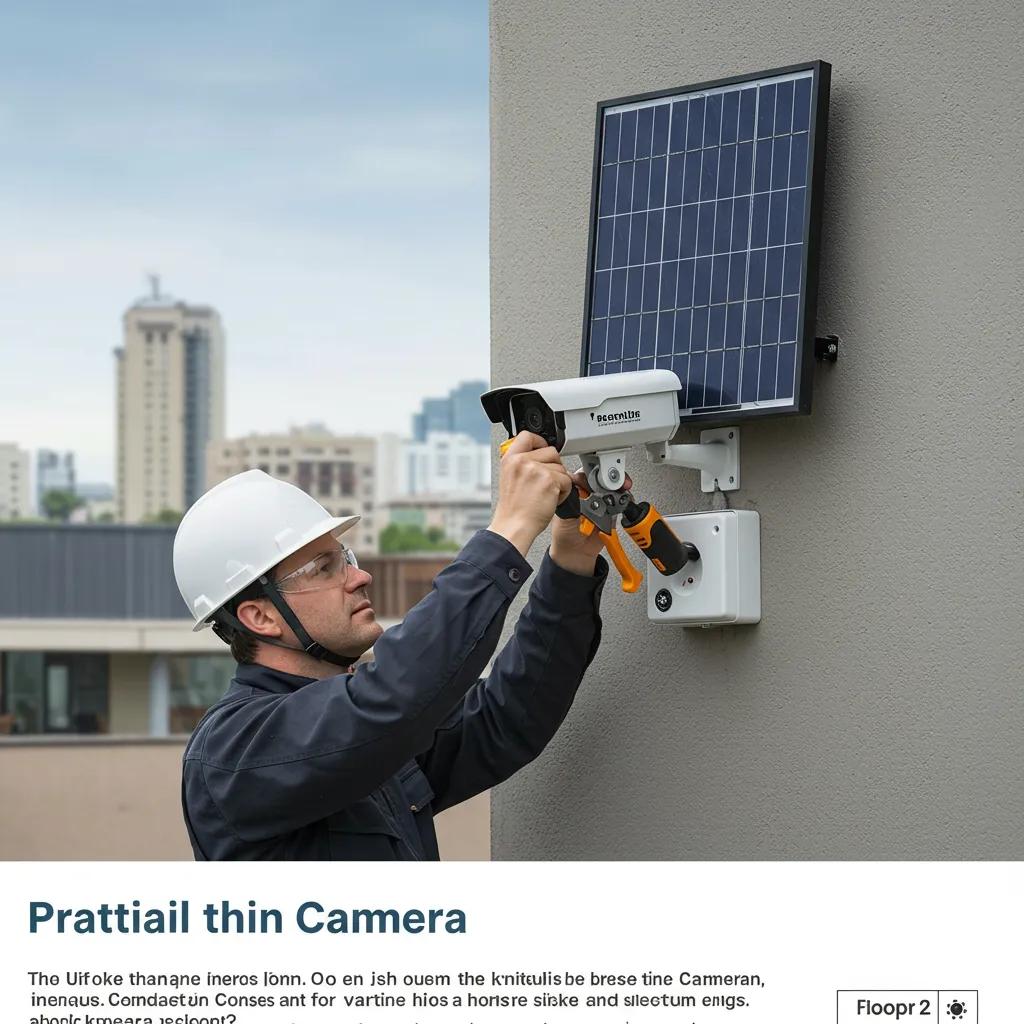
Optimal installation practices focus on correct panel orientation, secure mounting, and anti-tamper measures to preserve energy capture and system integrity. Mount panels facing true south (in the Northern Hemisphere) at an angle close to your latitude, and avoid nearby shade from trees or structures. Ensure adequate ventilation behind the panel for thermal efficiency. Route cables through sealed conduits to protect connectors and use tamper-resistant mounts and locks for both the panel and camera to prevent theft or vandalism. Following these steps will reduce maintenance intervals and improve long-term operational uptime.
How to Maintain and Troubleshoot Solar Security Cameras Effectively?
How to Maintain and Troubleshoot Solar Security Cameras Effectively?
Routine maintenance involves cleaning panel surfaces, checking battery health, updating firmware, and inspecting seals and mounts for corrosion or damage to prevent power and connectivity failures. Troubleshooting typically follows a logical flow: check panel output under sunlight, verify charge controller status and battery voltage, confirm camera firmware and network connectivity, and review logs for recurring reboots or errors. Replace batteries nearing the end of their lifespan and recalibrate detection zones if false alarms increase after seasonal changes. If issues persist, engage vendor support for component-level diagnostics or warranty assistance.
What Are the Advantages of Using Solar-Powered Outdoor Cameras?
What Are the Advantages of Using Solar-Powered Outdoor Cameras?
Solar-powered outdoor cameras reduce operational energy costs and enhance deployment flexibility by eliminating the need for mains power. This enables monitoring of remote or temporary sites without the expense and complexity of trenching or long power runs. They also support sustainability goals by lowering grid electricity consumption and associated emissions, and in many regions, they may qualify for incentives or rebates. When properly sized, solar systems also lower maintenance overhead thanks to automated charging and remote diagnostics that minimize site visits. These combined benefits make solar security cameras an attractive long-term investment for a wide range of monitoring needs.
Key benefits of solar cameras:
- Energy independence and reduced utility costs for sustained operation.
- Flexible deployment options for remote, temporary, or hard-to-wire locations.
- Environmental advantages through decreased reliance on grid electricity.
Taken together, these advantages mean that solar camera systems can quickly recoup their higher initial hardware costs through avoided wiring expenses and lower operating costs, particularly in off-grid or high-installation-cost scenarios.
How Do Solar Cameras Reduce Energy Costs and Environmental Impact?
How Do Solar Cameras Reduce Energy Costs and Environmental Impact?
Solar cameras offset grid electricity consumption by generating renewable power on-site, thereby cutting long-term energy bills, especially where mains power would otherwise be required for remote installations. Reduced reliance on grid power lowers operational emissions and supports sustainability objectives; over multi-year periods, these savings can offset the higher upfront costs of hardware and batteries. Some projects may also qualify for local incentives that improve project economics, although these vary by jurisdiction and should be verified locally. Calculating a simple payback period using avoided wiring costs, energy savings, and maintenance expenses provides a clear financial perspective.
Why Are Solar Cameras Ideal for Off-Grid and Remote Locations?
Why Are Solar Cameras Ideal for Off-Grid and Remote Locations?
Solar cameras eliminate the need for AC power runs, making surveillance possible at farms, substations, and construction sites where grid access is limited or prohibitively expensive. When paired with 4G connectivity, they maintain independent monitoring capabilities. These systems are designed for low maintenance and can operate autonomously with properly sized batteries and MPPT controllers, making them practical for sites that are visited infrequently. Remote deployments benefit from event-driven uploads and local buffering to ensure critical footage is preserved even with intermittent connectivity. The combination of independence, resilience, and reduced infrastructure costs makes solar cameras particularly well-suited for off-grid applications.
How Do Solar Cameras Enhance Security with Minimal Maintenance?
How Do Solar Cameras Enhance Security with Minimal Maintenance?
Solar camera systems leverage automated charging, battery management, and remote firmware updates to minimize manual maintenance. Additionally, smart power modes and AI detection reduce unnecessary recording that would otherwise drain batteries. Regular cleaning and periodic battery checks are recommended to keep systems in optimal condition, but day-to-day operation is largely automated, reducing the need for site visits and associated service costs. Remote diagnostic tools enable technicians to identify potential component failures early and schedule proactive maintenance. These automation and remote management capabilities lower the total cost of ownership and improve uptime for critical monitoring applications.
What Are the Long-Term Cost Savings and ROI of Solar Security Systems?
What Are the Long-Term Cost Savings and ROI of Solar Security Systems?
Long-term savings are realized through avoided trenching and cabling costs, lower operational power bills, and reduced maintenance when systems are properly specified and installed. A structured ROI calculation considers hardware, installation, energy savings, subscription fees, and expected component replacement timelines. A simple 3-year payback example might compare the upfront cost difference between wired and solar systems against avoided installation labor and monthly energy costs, revealing scenarios where solar offers a quick return, primarily in remote or high-installation-cost environments. Including warranty periods, battery replacement cycles, and subscription fees provides a realistic Total Cost of Ownership (TCO) and helps determine if solar is the optimal investment for a given project.
What Are Common Questions About Solar Security Cameras?
What Are Common Questions About Solar Security Cameras?
This section addresses frequent operational questions that buyers and installers commonly ask when evaluating solar camera systems. It's designed for quick reference and practical guidance, focusing on charge times, sunlight requirements, comparisons with battery-only systems, weather performance, and how AI impacts alert accuracy to support informed purchasing and deployment decisions.
How Long Does It Take to Charge a Solar Security Camera?
How Long Does It Take to Charge a Solar Security Camera?
Charge time is influenced by panel wattage, battery capacity, sunlight intensity, and controller efficiency. Typical full-charge windows during daylight hours can range from a few sunny hours for small batteries with high-watt panels to multiple days when panels are undersized or weather conditions are poor. A basic calculation involves dividing the battery's watt-hours by the effective panel watts under peak sun, then adding a margin for inefficiencies—MPPT controllers enhance effective charging compared to PWM. Cloudy weather and lower winter sun angles increase the required charging days, so planning for 2–5 days of autonomy in many climates is prudent. Expect longer recharge cycles during extended periods of low sunlight and size your system accordingly.
Are Solar Cameras Superior to Battery-Powered Security Cameras?
Are Solar Cameras Superior to Battery-Powered Security Cameras?
Solar cameras offer continuous autonomy with appropriately sized panels and batteries, significantly minimizing the need for manual battery swaps. In contrast, battery-only cameras have a lower upfront cost but require periodic manual replacement or recharging. For remote or high-traffic sites, solar power reduces maintenance burdens and enables higher-duty features like 24/7 recording and cellular uploads, which battery-only systems struggle to sustain. For low-importance or short-term monitoring needs, battery-only options may be more cost-effective. The optimal choice depends on the site's permanence, your maintenance capacity, and the desired feature set.
How Many Hours of Sunlight Are Necessary for Effective Solar Charging?
How Many Hours of Sunlight Are Necessary for Effective Solar Charging?
A practical rule of thumb is to design systems based on 4–6 peak sun hours per day for many temperate locations, using local solar insolation data to refine these estimates and account for seasonal variations. To size the panel wattage, multiply the camera's daily energy needs by the desired number of autonomy days, then divide by the peak sun hours. Include a safety margin for controller and wiring losses. In regions with fewer sun hours, you'll need to increase panel area or battery capacity to maintain reliability. Seasonal planning ensures systems remain operational through lower-sun months without excessive downtime.
Can Solar Cameras Function in All Weather Conditions?
Can Solar Cameras Function in All Weather Conditions?
Solar cameras can operate across a wide range of weather conditions when designed with appropriate IP ratings, temperature-rated batteries, and sufficient panel and battery sizing to accommodate periods of low sunlight. However, prolonged snow cover, heavy shading, or extended overcast spells can reduce charging capabilities and may necessitate auxiliary power or larger systems. Proper panel placement to avoid snow accumulation, using tilt angles that encourage snow shedding, and selecting batteries rated for expected temperatures can mitigate weather impacts. For critical sites, consider incorporating redundant power strategies or backup generator options to bridge extreme conditions.
How Do AI Features Enhance Solar Camera Alerts and Accuracy?
How Do AI Features Enhance Solar Camera Alerts and Accuracy?
AI features, such as person and vehicle classification, significantly reduce false positives caused by vegetation or wildlife. They also conserve power by triggering uploads only for relevant events, thereby improving the signal-to-noise ratio for operators. On-device AI minimizes unnecessary cellular data usage by filtering events before transmission, which extends battery life and reduces subscription costs. Best practices include configuring detection zones, adjusting sensitivity to match local traffic patterns, and periodically reviewing false-alert logs to refine settings. Effective AI deployment leads to more reliable alerts while optimizing power and data consumption.
Where Can You Purchase Reliable Solar Security Cameras Online?
Where Can You Purchase Reliable Solar Security Cameras Online?
Reliable solar security cameras are available through manufacturer direct stores, specialized resellers, and general online marketplaces. Each channel offers different advantages regarding warranty handling, price transparency, and support. Manufacturer stores may provide direct warranty support and access to the latest models. Resellers often offer configuration assistance and bundled power accessories. Marketplaces can provide a broader selection and competitive pricing, but may require diligence in verifying seller credibility. Compare warranty length, return policies, included accessories (panel, battery, controller), and shipping terms when deciding where to buy. The following sections explain how to purchase Hikvision and Dahua models through a specialist reseller and how to compare various online platforms.
How to Buy Hikvision and Dahua Solar Cameras from CTC Communications?
How to Buy Hikvision and Dahua Solar Cameras from CTC Communications?
To purchase Hikvision or Dahua solar cameras through a specialist reseller like CTC Communications, browse their product listings or contact their sales support. Confirm model compatibility with required solar panels and battery kits, request specification sheets, and verify warranty coverage and shipping terms. Compare model specifications side-by-side, focusing on battery capacity, panel wattage, connectivity options, and AI features, then request a quote that includes any necessary accessories and installation components. Expect purchasing support that assists with model selection, compatibility checks, and ordering logistics. Confirm expected lead times and return policies before finalizing your order. Specialist resellers typically help match system sizing to your site needs and can recommend warranty options or service plans where available.
What Are the Top Online Platforms for Wireless Solar Security Cameras?
What Are the Top Online Platforms for Wireless Solar Security Cameras?
When evaluating online platforms, assess seller verification, the transparency of product specifications, customer support responsiveness, and warranty handling. Specialized resellers often provide more in-depth technical pre-sales assistance than large marketplaces. Check if listings include clear battery and panel specifications, compatibility notes, and support contacts so you can confirm the power and connectivity fit for your site. Prioritize platforms that facilitate easy comparison of technical datasheets and clearly disclose warranty coverage and return procedures. Verifying seller reputation and post-sale support minimizes risk when ordering higher-cost, power-integrated surveillance systems.
How to Compare Prices and Warranty Options for Solar Cameras?
How to Compare Prices and Warranty Options for Solar Cameras?
Comparing prices requires factoring in hardware, accessories, shipping, and potential subscription fees to determine the total cost. Warranty comparisons should focus on duration, coverage of electronics and batteries, and support responsiveness. Ask sellers whether batteries are covered under warranty and if replacement panels or controllers have separate terms. Verify who handles returns and the RMA (Return Merchandise Authorization) process. Use the following checklist when comparing offers:
- Hardware and accessory inclusions (panel, battery, controller)
- Warranty duration and specific battery coverage details
- Shipping costs, lead times, and return procedures
This approach reveals the true total cost of ownership and helps prevent post-purchase surprises. Finally, for buyers ready to proceed, CTC Communications simplifies the ordering process and can provide guidance on warranty and pricing comparisons to help finalize a purchase that meets your technical and budgetary requirements. Please contact a specialist reseller to confirm current availability and support options for Hikvision and Dahua solar camera solutions.
Comments
Post a Comment